Sunday, September 13, 2026
Walk Toward the Light
 |
|
When life seems darkest, continue walking toward the light. The empty tomb reminds us that because Jesus Christ lives, darkness does not have the final word. Image created by ChatGPT. |
Encounter at the Empty Tomb: Finding Jesus Christ in Times of Faith, Uncertainty, and Discipleship
Introduction
In his April 2026 general conference address, “Encounter at the Empty Tomb,” President Dieter F. Uchtdorf reflects on the women who approached the tomb of Jesus Christ early on the morning of the Resurrection. They came carrying grief, uncertainty, and unanswered questions. They were not expecting a miracle. They simply continued forward because of their love for the Savior.
What they discovered changed not only their lives but the course of human history: the tomb was empty. Jesus Christ had risen.
President Uchtdorf uses their experience to invite each of us to have our own encounter with the meaning of the empty tomb. We were not there on that Easter morning, but we can come to know through faith and personal spiritual experience that Jesus Christ lives. That knowledge should then influence how we live, serve, make choices, and treat others.
Summary
President Uchtdorf begins with Mary and the other women making their way to Christ’s tomb while it was still dark. They were grieving and undoubtedly had questions about how the Savior, who had healed the sick, raised the dead, and performed miracles, could Himself have died. Yet they continued toward Him. They did not have complete understanding; they simply acted because they loved Him.
At the tomb, they discovered that the stone had been rolled away and heard the extraordinary declaration that Jesus Christ had risen. President Uchtdorf emphasizes that this means Christ should not be viewed merely as a historical figure. Jesus Christ lives now. He continues to guide, comfort, strengthen, and bless those who follow Him.
The women at the tomb were given two responsibilities: first, to see and understand what had happened, and second, to go and tell others. President Uchtdorf applies these same responsibilities to modern disciples. We should seek our own testimony of the Savior and then become witnesses of Him through both our words and our actions.
One of the most meaningful parts of the message concerns unanswered questions. President Uchtdorf acknowledges that people may struggle with questions about life circumstances, the gospel, or the Church. He does not suggest that faith requires having every answer. Instead, he points to Mary and the other women: when everything seemed dark, they continued walking toward Christ. Understanding often comes after we begin moving forward in faith.
Ultimately, the empty tomb becomes a symbol of hope. Because Christ overcame death, no darkness, sorrow, uncertainty, or difficulty needs to have the final word. The invitation is to become joyful and consistent disciples who allow belief in the risen Christ to change how we live each day.
Five Memorable Quotes
- “When the world is dark, the best place to go is toward ‘the light [that] shines in … darkness.’”
- “Even when things seem dark, we step forward in faith, with courage and humility, and walk toward the Savior’s light.”
- “Like the warmth and light of the morning sun, we will feel the love and healing of the Son of God.”
- “Darkness will give way to eternal light.”
- “Jesus Christ is the light that leads us through this life, through any valley of sorrow, over beautiful mountains of joy, and across any ocean of uncertainty or temptation.”
How This Applies to Me
The part of this message that speaks most strongly to me is the example of the women walking toward the tomb before they knew what they would find. They did not understand everything. Their questions had not been answered. They were grieving and uncertain, yet they continued moving toward Christ.
That is an important reminder for me. I sometimes want understanding before action: I want to know how something will work out, why something happened, or what the eventual answer will be. This message reminds me that faith often reverses that order. Sometimes I must move forward first and allow understanding to come later.
It also makes me think about the experiences I have already had. President Uchtdorf asks, in essence, what have I personally seen, felt, or experienced? My testimony does not have to depend entirely on someone else’s experiences. I can look back on moments when I have felt peace, received guidance, experienced unexpected strength, or recognized God’s influence in my life. Those experiences become my own witnesses.
Another lesson concerns how I share what I believe. President Uchtdorf emphasizes that discipleship is not demonstrated only through words. Consistent acts of kindness, service, courage, patience, and love may communicate faith more powerfully than anything I say.
Finally, the empty tomb reminds me to approach difficulties with hope. Problems can be real without being permanent. Questions can remain unanswered without destroying faith. Darkness can surround me without becoming my destination. The women went to the tomb while it was still dark—but morning was already coming.
Perhaps that is the message I most want to remember:
Keep walking toward the light, even when I cannot yet see the sunrise.
Reference: Uchtdorf, D. F. (2026, April). Encounter at the empty tomb. The Church of Jesus Christ of Latter-day Saints. https://www.churchofjesuschrist.org/study/general-conference/2026/04/41uchtdorf?lang=eng
Labels: discipleship, faith, hope, Jesus Christ, Resurrection


Monday, August 24, 2026
Christ Knows Us By Name
 |
| Image created by Gemini |
“He Knows You by Name”
Elder Clement M. Matswagothata, April 2026 General Conference
Summary
Elder Matswagothata teaches that Jesus Christ knows each person individually. He knows our names, joys, sorrows, burdens, and unspoken prayers. The Savior’s Atonement enables Him not only to understand our suffering but also to strengthen and help us through it.
Elder Matswagothata explains that his surname means “getting out of a difficult situation” or “someone who can do hard things.” For him, this meaning symbolizes the Savior’s power to guide us through difficult seasons.
He recounts a time when grief, work pressures, family responsibilities, and Church service left him feeling overwhelmed. His reassurance came unexpectedly through a young boy who told him that his family prayed for him every morning and evening. Through this experience, Elder Matswagothata felt seen, loved, and remembered by the Savior.
The talk concludes by emphasizing that Christ will walk with us. The important question is whether we will deliberately walk with Him. Through faith, repentance, scripture study, covenants, and discipleship, we can receive His enabling power and find a way forward.
Central teaching
The Savior does not see us as anonymous members of a crowd. He knows and loves us individually. As we take His name upon ourselves through sacred covenants, His name becomes the most important part of our eternal identity.
Teaching points
- Jesus Christ knows us personally.
The Lord called Adam, Mary, Saul, Joseph Smith, and Moses by name. These examples show that God’s relationship with His children is personal. - The Savior understands every kind of suffering.
Because of His Atonement, Christ understands grief, illness, loneliness, anxiety, temptation, and silent pain. He knows how to succor—or personally assist—us. - Pain does not mean God has abandoned us.
Difficult circumstances are not evidence that God has stopped loving us. Trials may continue, but the Savior remains present. - God often answers prayers through other people.
The Primary child and his family became instruments through whom Elder Matswagothata felt the Savior’s love. - We should notice and lift those around us.
Just as God places people in our path to help us, He may place us in someone else’s path as an answer to prayer. - Covenants connect us with Christ’s power.
Through baptism, the sacrament, and temple covenants, we take Christ’s name upon ourselves and gain access to His enabling power. - Following Christ must be intentional.
Discipleship is more than occasional belief. It includes remembering Him, studying His words, repenting daily, and following Him consistently. - There is always a way forward through Christ.
The Savior not only shows us the way through hardship; He is the way.
Key quotations
- “He hears, sees, and knows you.”
- “To the Savior, we are never lost in the crowd.”
- “Your pain is not a sign that God does not love you.”
- “The real question is ‘Will I walk with Him?’”
- “May we become the kind of disciples who notice, reach out, and lift as the Savior did.”
- “In His time and in His way, there is always a way forward.”
- “He not only knows the way; He is the way.”
- “He desires to lead us home—one by one, by name.”
Lessons learned
- I can trust that Christ knows what I am experiencing, even when other people do not.
- I should not interpret unanswered prayers or continuing trials as evidence that God has forgotten me.
- An encouraging word, prayer, smile, hymn, or simple act of kindness may become God’s answer to another person.
- I should pay closer attention to people who may be carrying quiet burdens.
- Remembering Christ during the sacrament can strengthen my covenant identity and help me face difficult circumstances.
- Peace does not always come because a problem immediately disappears. It can come from knowing that the Savior walks beside me.
- Following Christ requires deliberate daily choices.
- My deepest identity comes from taking upon myself the name of Jesus Christ.
Discussion questions
- When have you felt that the Savior knew you personally?
- Who has God placed in your path during a difficult time?
- How can we become better at noticing people who carry quiet burdens?
- What does it mean in daily life to take the name of Jesus Christ upon ourselves?
- What could you do this week to walk with Christ more deliberately?
Read “He Knows You by Name” on ChurchofJesusChrist.org
Labels: covenant identity, discipleship, divine love, Jesus Christ, known by name
Sunday, August 09, 2026
Finding strength in Jesus
I Glory in My Jesus

In his April 2026 general conference message, “I Glory in My Jesus,” Elder Aaron T. Hall teaches that discipleship is not only about knowing who Jesus Christ is, but about coming to know Him personally.
Elder Hall draws on Nephi’s declaration:
“I glory in my Jesus.” —2 Nephi 33:6
The word “my” is significant. Nephi had experienced the Lord’s help, mercy, protection, and sustaining power. Because of those experiences, Jesus Christ was not distant or abstract to him. Nephi knew the Savior personally.
Elder Hall encourages us to develop that same relationship with Christ. One way to do this is to study the many names and titles of Jesus Christ and consider what each reveals about His mission and His role in our lives.
Key Teachings
Jesus Christ is our Redeemer.
Through His Atonement, we can repent, receive forgiveness, and change. Repentance is not simply about correcting mistakes; it is an invitation to return to Christ and become more like Him.
Jesus Christ is our Good Shepherd.
He guides, gathers, protects, and seeks after us. When we feel lost or uncertain, He continues to invite us to follow Him.
Jesus Christ is our Healer.
The Savior understands our physical, emotional, and spiritual pain. His healing may come immediately, gradually, or ultimately through the Resurrection, but His power to heal is certain.
Jesus Christ is our Advocate.
Because of His Atonement, Christ pleads our cause before the Father. We depend upon His grace and mercy rather than relying solely upon our own efforts.
Jesus Christ is our Lawgiver.
His commandments are not merely restrictions. They provide direction, protection, and a path that leads us back to God.
Jesus Christ is our Deliverer.
He can deliver us from sin, fear, temptation, sorrow, and ultimately from death. Sometimes He removes our trials; at other times, He gives us strength to endure them.
Names of Jesus Christ Highlighted in the Message
Jesus, Jesus Christ, Son of God, Messiah, Redeemer, Savior, King of Kings, Prince of Peace, Good Shepherd, Healer, Advocate, Lawgiver, Deliverer, Master, Counselor, Friend, the Living Christ, and the Resurrected Christ.
Each name teaches us something about who Christ is and how He ministers to us.
A Question for Personal Study
Elder Hall’s message invites us to move from saying:
“Jesus Christ is the Savior”
to being able to say:
“Jesus Christ is my Savior.”
As we recognize His influence in our lives, our testimony becomes increasingly personal.
Consider asking:
Which name of Jesus Christ describes how I most need Him in my life today?
When we experience His mercy, direction, healing, forgiveness, and sustaining power, we can come to understand Nephi’s simple but powerful declaration:
“I glory in my Jesus.”
Reference
Hall, A. T. (2026, April). I glory in my Jesus. General Conference, The Church of Jesus Christ of Latter-day Saints. https://www.churchofjesuschrist.org/study/general-conference/2026/04/53hall?lang=eng
I can also turn this into a clean one-page printable PDF handout if you want.
Labels: covenants, discipleship, faith, Jesus Christ, redemption
Sunday, February 08, 2026
Moses 7 — "Zion is Fled"
Lesson Plan: Moses 7 — "Zion is Fled"
This lesson focuses on the ministry of Enoch, the nature of God’s love, and the establishment of Zion. It is designed to help students see God not as a distant observer, but as a Father who is deeply involved in our lives.
I. The Story of Enoch: A Summary
Enoch began his ministry as a man who felt "slow of speech" and unworthy (Moses 6:31). However, through faith, he became a powerful prophet. In Moses 7, we see the culmination of his work. He led the people of God against their enemies, and his faith was so great that "he spake the word of the Lord, and the earth trembled, and the mountains fled" (Moses 7:13).
His greatest achievement was not military, but spiritual: he founded the City of Holiness, called Zion, which was eventually taken up into heaven because the people lived in perfect righteousness.
II. The Weeping God (Moses 7:28–40)
One of the most profound moments in scripture occurs when Enoch sees the God of Heaven weep.
The Surprise: Enoch was astonished. He asked, "How is it that thou canst weep, seeing thou art holy, and from all eternity to all eternity?" (v. 29).
The Reason: God wept because of the wickedness of His children. He explained that He gave them agency and the commandment to love one another, yet they were "without affection" and hated their own blood (v. 32–33).
The Lesson: This teaches us that God is not a stoic, unfeeling being. He is moved by our choices and feels "bitterness" when we suffer or reject His love.
III. Key Prophecies: Ancient and Modern
Enoch’s vision spanned the history of the world. He prophesied:
The Coming of the Son of Man: Enoch saw the sacrifice of Jesus Christ, the "Lamb slain from the foundation of the world" (v. 47). This title reminds us that the Atonement was central to God's plan before the earth was even formed.
The Restoration and the Book of Mormon: God promised that in the last days, "righteousness will I send down out of heaven; and truth will I send forth out of the earth" (v. 62). This refers to the ministry of angels and the coming forth of the Book of Mormon to gather the elect.
The Second Coming: Enoch saw the earth "rest" when Christ returns in the latter days (v. 64–65).
Application: These prophecies apply to us today because we are living in the era of the "gathering." Just as Enoch prepared a people for Zion, we are tasked with preparing the world for the Savior’s return by sharing the "truth sent forth out of the earth."
IV. Jesus Christ: The King of Zion (Moses 7:53)
In verse 53, the Lord declares, "I am Messiah, the King of Zion, the Rock of Heaven."
The Gate: To "come in at the gate" means to enter the covenant path through baptism.
Climbing up by Him: This suggests that salvation is an upward journey. We do not reach the "Rock of Heaven" on our own strength; we use His Atonement as the means to ascend.
King of Kings: Having Christ as our King means we submit our will to His, seeking His laws above the laws of the world.
V. Building Zion in Our Day
The scriptures define Zion as a people who are "of one heart and one mind, and dwelt in righteousness; and there was no poor among them" (Moses 7:18).
| Principle | How to Build It Today |
| One Heart | Developing empathy and genuine love for our neighbors. |
| One Mind | Seeking unity in the gospel and following the living prophets. |
| Righteousness | Prioritizing personal holiness and temple covenants. |
| No Poor Among Them | Engaging in welfare, fast offerings, and looking after the marginalized. |
VI. Clarifying the "Seed of Cain"
The text mentions that the "seed of Cain were black" (Moses 7:22). Within the context of Moses 7, this is described as a result of their own withdrawal from God. In verse 8, it notes they lived in a land of "darkness."
Important Perspective: As modern prophets have taught, God "denieth none that come unto him, black and white, bond and free, male and female" (2 Nephi 26:33). The "darkness" or "blackness" mentioned in ancient texts is often a symbolic representation of a spiritual state—being separated from the light of the Spirit—rather than a commentary on race as we define it today.
VII. Discussion Questions
How does knowing that God weeps for us change how you pray to Him?
What "bitterness" in the world today makes you feel like Enoch (v. 44), and how does the promise of the Second Coming give you hope?
What is one specific way our family/class can become more "of one heart" this week?
To help you teach this lesson more effectively, here is a supplemental Teaching Activity Guide focused on the key themes of Moses 7.
🎨 Object Lesson: "One Heart and One Mind"
Goal: To demonstrate the power of unity in building Zion.
The Material: A large bundle of individual toothpicks or small sticks.
The Demonstration: Hand a student a single toothpick and ask them to break it. It breaks easily. Then, take 20 toothpicks and wrap them tightly together with a rubber band. Ask the student to try and break the bundle.
The Lesson: When the people of Enoch were "of one heart," they became unbreakable. Zion isn't just about being good individuals; it’s about the strength that comes from being bound together by covenants and love (Moses 7:18).
📖 Deep Dive: The Vision of the Last Days
Enoch was shown our day to give us hope. You can use this table to help students visualize the "Gathering" process described in Moses 7:62.
| The Prophecy | The Fulfillment Today |
| "Righteousness will I send down out of heaven" | The restoration of the Priesthood and the keys brought by heavenly messengers. |
| "Truth will I send forth out of the earth" | The coming forth of the Book of Mormon (literally "out of the dust"). |
| "To sweep the earth as with a flood" | The global reach of missionary work and digital sharing of the Gospel. |
| "Gather out mine elect" | The building of Temples and Stakes of Zion across the world. |
💭 Personal Reflection Activity: "The Weeping God"
Read Moses 7:37 together: "But behold, these... shall suffer; wherefore should not the heavens weep, seeing these shall suffer?"
Ask the class:
How does it feel to know that God doesn't just "observe" your trials, but He actually feels them with you?
Enoch's heart "stretched wide as eternity" (v. 41) when he saw things from God's perspective. How can we make our hearts "stretch" to be more compassionate toward people in our community who are suffering?
🎵 Hymn Integration
To close the lesson, consider singing or listening to "Come, O Thou King of Kings" (Hymns, no. 59).
Watch for these lyrics:
"The Zion of the Lord shall flourish and spread abroad..."
Ask the students to identify which phrases in the hymn correlate with the promises God made to Enoch about the Second Coming and the eventual meeting of the "earthly Zion" and the "heavenly Zion" (Moses 7:63–64).
Handout: Zion, Enoch, and the Heart of God
1. The Prophet Enoch: From Weak to Strong
The Man: He felt "slow of speech" and feared people hated him (Moses 6:31).
The Miracle: Because he walked with God, he moved mountains and turned rivers.
The Goal: He didn't just save individuals; he built a community so righteous that God took the whole city to heaven.
2. What is Zion? (Moses 7:18)
Zion is not just a place; it is a way of living. It is built on three pillars:
Unity: One Heart and One Mind.
Purity: Dwelling in Righteousness.
Equality: No poor among them.
3. The Nature of God (The "Great Surprise")
When Enoch saw the God of Heaven weeping (Moses 7:28), he learned:
God is not distant: He is deeply affected by our choices.
The "Why": He weeps because we are "without affection" toward one another.
The Comfort: Because He weeps with us, He knows perfectly how to comfort us.
4. Prophecies of Our Day (Moses 7:62)
God promised Enoch that in the last days:
From Heaven: Righteousness (Angels/Authority) would come down.
From Earth: Truth (The Book of Mormon) would come up.
The Result: These two forces would "sweep the earth as with a flood" to gather God's family before the Second Coming.
Reflection Question
"I am Messiah, the King of Zion, the Rock of Heaven." (v. 53)
If Jesus is the "King" of your life today, what is one thing you would do differently this week to show Him your loyalty?
Teacher’s Tip: The "Two Zions" Meeting
Explain the beautiful promise in Moses 7:63: When we build Zion on earth, the Zion from heaven (Enoch’s city) will come down to meet us. God says, "We will fall upon their necks, and they shall fall upon our necks, and we will kiss each other." It is a prophecy of a grand, loving family reunion.
Here are five Scripture Mastery Cards designed for your class. You can print these out (or copy them onto cardstock) to help students keep the core doctrines of Moses 7 in their hearts and minds throughout the week.
Card 1: The Definition of Zion
Scripture: Moses 7:18
"And the Lord called his people Zion, because they were of one heart and one mind, and dwelt in righteousness; and there was no poor among them."
Key Principle: Building Zion starts with how we treat the person sitting next to us.
Challenge: Find one way to create "unity" in your family or circle of friends today.
Card 2: The Compassion of God
Scripture: Moses 7:28
"And it came to pass that the God of heaven looked upon the residue of the people, and he wept."
Key Principle: God is not a distant observer; He is a loving Father who feels our joys and our sorrows.
Challenge: When you see someone hurting, remember that God feels for them, and pray for a way to help.
Card 3: The Rock of Heaven
Scripture: Moses 7:53
"I am Messiah, the King of Zion, the Rock of Heaven, which is broad as eternity; whoso cometh in at the gate and climbeth up by me shall never fall."
Key Principle: Jesus Christ is the only sure foundation. We "climb" toward heaven by relying on His strength, not just our own.
Challenge: Identify one "step" you can take this week to "climb" closer to the Savior.
Card 4: Truth from the Earth
Scripture: Moses 7:62
"And righteousness will I send down out of heaven; and truth will I send forth out of the earth, to bear testimony of mine Only Begotten."
Key Principle: This is a prophecy of the Book of Mormon coming out of the ground to help gather the elect in the last days.
Challenge: Share a truth from the Book of Mormon with someone this week to help "sweep the earth" with light.
Card 5: The Grand Reunion
Scripture: Moses 7:63
"Then shalt thou and all thy city meet them there, and we will receive them into our bosom... and we will kiss each other."
Key Principle: The goal of the Gospel is a joyful reunion. God is preparing us for the day when the Zion we build meets the Zion of Enoch.
Challenge: Think of someone you look forward to seeing in heaven. How can you live today to honor that relationship?
🎓 Teacher’s Notes: The JST and the "Book of Enoch"
1. Restoring What Was Lost
The Bible (Genesis 5) gives only a few verses about Enoch, mentioning that he "walked with God" and "was not; for God took him."
The JST Connection: In 1830, while Joseph Smith was inspired to translate the Bible, he received a massive revelation that expanded those few verses into the nearly 120 verses we now have in Moses 6 and 7.
The Takeaway: Without the JST, we wouldn't know about the City of Zion, God’s weeping, or Enoch’s vision of the Second Coming. This is a prime example of the "plain and precious things" being restored.
2. The Covenant with Noah (Moses 7:49–52)
In the traditional Bible, the covenant with Noah is often seen as just the promise to never flood the earth again.
The JST Insight: Moses 7 shows that this covenant actually started with Enoch. God swore to Enoch that He would stay the floods and call upon the children of Noah.
The "Bow" Symbolism: The JST clarifies that the rainbow is a sign of the eternal covenant, specifically that Zion will return and the Lord will dwell there again (v. 62–63).
3. The "Lamb Slain from the Foundation of the World" (Moses 7:47)
This phrase is found in the New Testament (Revelation 13:8), but the JST places it firmly in the Old Testament era.
Why it matters: It proves that the Gospel of Jesus Christ was taught from the very beginning. Enoch and his people weren't just living "good lives"—they were Christians who built their city on the Atonement of Messiah.
🎨 Visualization: The Two Zions Meeting
This image helps illustrate Moses 7:63. You can explain to the class that "Zion" is not just one city in the past, but a future event where the faithful from all ages finally reunite.
Summary Table for the Class
| Topic | Traditional Genesis | Moses 7 (JST) |
| Enoch's Ministry | Mentioned in 6 verses. | Described in detail (two chapters). |
| The City of Zion | Not mentioned. | The central focus of his success. |
| God's Emotions | Often portrayed as angry. | Revealed as a Father who weeps. |
| Noah's Covenant | Focused on the Flood. | Focused on the return of Zion. |
Labels: covenants, Enoch, Jesus Christ, Noah, Zion
Sunday, January 04, 2026
Jehovah is Jesus Christ
Understanding Jesus Christ as the God of the Old Testament and what that truth means for covenant discipleship
 |
| The Last Judgment by J.W. Scott - mural in Washington D.C. temple |
By John Fisher (assisted by AI)
One of the most significant doctrinal truths restored in modern times is the clear understanding that Jesus Christ is Jehovah, the God who spoke and acted throughout the Old Testament. This knowledge reshapes how we read scripture, understand God’s dealings with humanity, and view our own covenant relationship with Him. Far from being distant or abstract, the God of the Old Testament is the same loving Redeemer who walked the roads of Galilee and invites us today to “hear Him.”
President Dallin H. Oaks summarized this doctrine succinctly, teaching that when scripture records words spoken by “God” or “the Lord,” those words are “almost always the words of Jehovah, our risen Lord, Jesus Christ” (Oaks, 2023).
Jesus Christ as Jehovah
President Oaks explained:
“The Father introduced His Only Begotten Son, Jesus Christ, as our Savior and Redeemer and gave us the command to ‘hear Him.’ From this direction we conclude that the scriptural records of words spoken by ‘God’ or the ‘Lord’ are almost always the words of Jehovah, our risen Lord, Jesus Christ.”
(Oaks, 2023, p. 102)
This teaching provides a unifying lens for scripture study. The God who covenanted with Abraham, delivered Israel from Egypt, and spoke through prophets was Jesus Christ acting under the direction of the Father.
This truth is powerfully illustrated in the New Testament. When Jewish leaders challenged Jesus’ authority, He declared, “Before Abraham was, I am” (John 8:58). This statement provoked outrage because Jesus was directly invoking the divine name revealed to Moses.
In Exodus, when Moses asked whom he should say had sent him, God replied, “I AM THAT I AM” (Exodus 3:14). Later the Lord clarified, “I am the Lord, and I appeared unto Abraham, unto Isaac, and unto Jacob” (Exodus 6:3). By using the phrase “I am,” Jesus unmistakably identified Himself as Jehovah—the covenant God of Israel.
Why This Doctrine Matters
Knowing that Jesus Christ is Jehovah makes the Old Testament deeply personal. The same Savior who invites the weary to come unto Him (see Matthew 11:28) is the God who led Israel through the wilderness, showed mercy again and again, and patiently taught His people through covenants.
This understanding strengthens faith, especially when encountering difficult or complex Old Testament passages. Rather than seeing two different Gods, we see one consistent divine character—perfectly just, infinitely merciful, and unwaveringly committed to the salvation of His children.
Restoring “Plain and Precious” Truths
The Lord foresaw that essential truths about His identity and covenant relationship would be lost over time. Nephi recorded that “many plain and precious things” would be taken from the Bible (1 Nephi 13:26). However, God promised to restore them through additional scripture and revelation.
The Book of Mormon plays a central role in this restoration. According to 2 Nephi 3:12, the Bible and the Book of Mormon “shall grow together, unto the confounding of false doctrines, and establishing peace.” Together, they testify that Jesus Christ is Jehovah and clarify His role across dispensations.
Other restored texts deepen this understanding:
-
The Book of Moses, restoring truths from Genesis 1–6
-
The Book of Abraham, revealing premortal councils and divine purpose (see Abraham 3:22–28)
-
Joseph Smith Translation passages, such as the account of Melchizedek (JST Genesis 14:25–40)
Accounts like Enoch’s Zion (Moses 7:18–19) and Abraham’s vision of the premortal life are “plain and precious” because they reveal the eternal scope of Christ’s ministry and His role as Jehovah before mortality.
Jehovah and Covenant Relationship
The Old Testament is fundamentally a covenant record. The Lord declared to Israel, “Ye shall be a peculiar treasure unto me” (Exodus 19:5). That covenant relationship—initiated by Jehovah—continues today.
Understanding Jesus Christ as Jehovah clarifies that He is the covenant-making and covenant-keeping God. Through Him, the “new covenant” promised by Jeremiah—where God’s law is written in our hearts—is fulfilled (Jeremiah 31:31–34).
As we study the Old Testament, important questions naturally arise: Why are covenants essential to my spiritual life? What blessings of love, mercy, and guidance come as I remain faithful to them? The answers consistently lead back to Jesus Christ.
Conclusion
Recognizing Jesus Christ as Jehovah transforms how we read the Old Testament. It becomes not merely a historical account, but a living testimony of the Savior’s ongoing relationship with humanity. From burning bush to Sinai, from covenant promises to prophetic warnings, it is Christ who speaks, leads, and redeems.
As we study the Old Testament, restored scripture, and modern prophetic teachings together, we gain a clearer, more unified witness of Jesus Christ—the same yesterday, today, and forever. Knowing Him as Jehovah deepens reverence, strengthens covenant commitment, and anchors faith in the eternal Redeemer.
Reference (APA Style)
Oaks, D. H. (2023, May). The teachings of Jesus Christ. Liahona, 100–105.
https://www.churchofjesuschrist.org/study/liahona/2023/05/51oaks?lang=eng
Labels: covenants, Jehovah, Jesus Christ, Old Testament, restored scripture
Old Testament Testifies of Christ
How symbols, types, and prophetic narratives in ancient scripture testify of Jesus Christ and invite us to center our faith and daily discipleship on Him
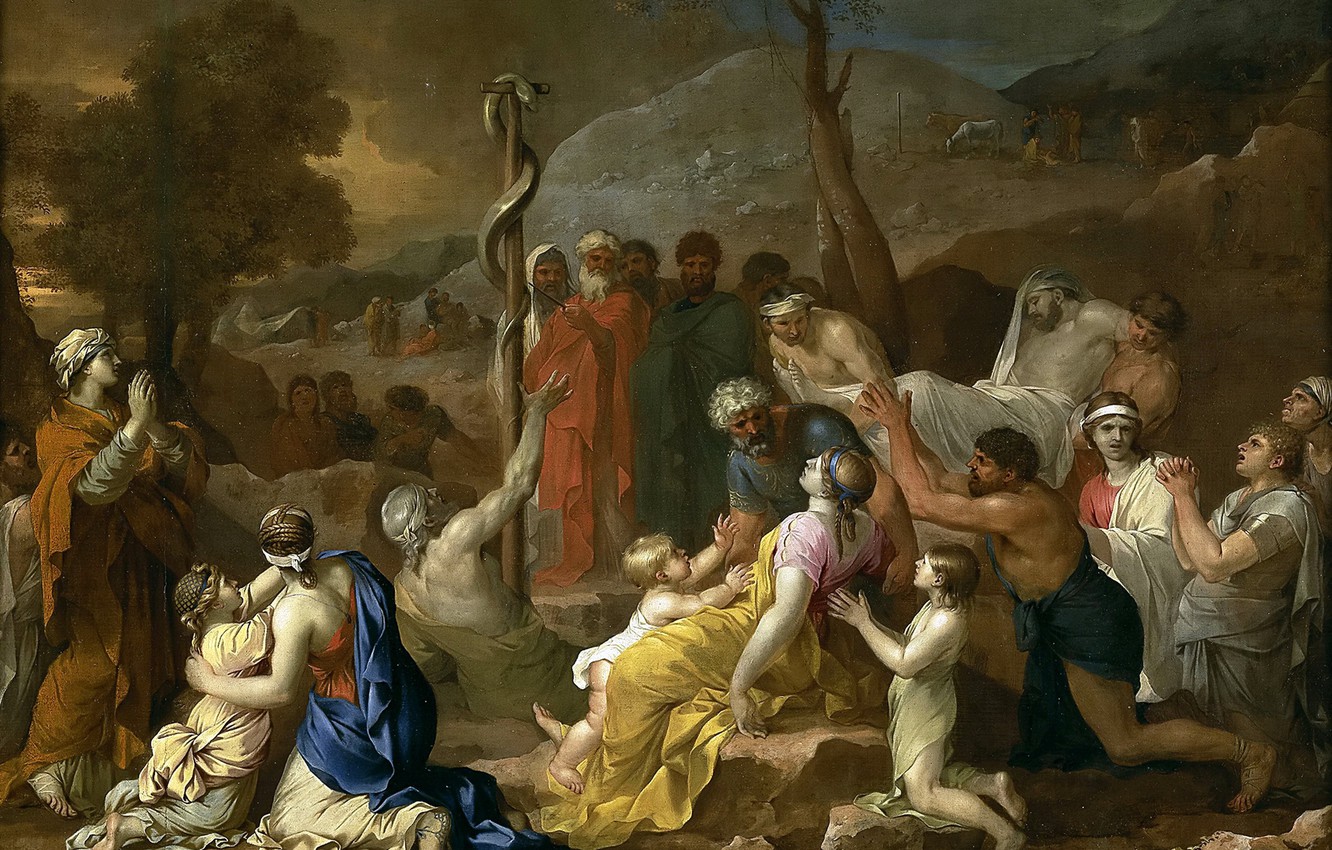 |
| Moses and the Brazen Serpent - Sebastien Bourbon c. 1653-4 |
By John Fisher (assisted by AI)
From its opening chapters to its prophetic promises, the Old Testament consistently bears witness of Jesus Christ. While His mortal ministry is recorded in the New Testament, the foundation of His mission, identity, and redeeming power is woven throughout the earlier scriptures. As the Savior Himself declared, “Search the scriptures; for in them ye think ye have eternal life: and they are they which testify of me” (John 5:39). One fruitful way to find spiritual nourishment in the Old Testament is to look for symbols, types, and narratives that point to Christ—the true Bread of Life (John 6:48). These accounts not only prepare the way for His coming but also deepen our understanding of who He is and what He offers to all who follow Him.
Types and Symbols of Jesus Christ in the Old Testament
Manna: The Bread of Life
When the children of Israel wandered in the wilderness, the Lord provided manna from heaven to sustain them daily. The Lord declared, “Behold, I will rain bread from heaven for you” (Exodus 16:4). Each morning the people gathered this miraculous food, described as “a small round thing…like coriander seed” (Exodus 16:14–15), sufficient for their immediate needs.
Jesus later revealed the deeper meaning of this provision: “I am the bread of life: he that cometh to me shall never hunger” (John 6:35). Just as manna sustained Israel physically, Christ sustains us spiritually. The daily gathering of manna teaches dependence upon God and reminds us that enduring spiritual life comes only through continual reliance on the Savior.
The Sacrificial Lamb
At the time of the Passover, Israel was commanded to select “a lamb without blemish” (Exodus 12:5) and to apply its blood as a sign of deliverance. This act preserved them from death and marked their liberation from bondage.
John the Baptist later identified Jesus as the fulfillment of this symbol: “Behold the Lamb of God, which taketh away the sin of the world” (John 1:29). The Passover lamb prefigures Christ’s perfect, sinless sacrifice. Through His atoning blood, all who follow Him are delivered from spiritual death and freed from the bondage of sin.
The Brass Serpent
When Israel murmured in the wilderness, fiery serpents afflicted the people. The Lord instructed Moses to raise a brass serpent so that “every one that is bitten, when he looketh upon it, shall live” (Numbers 21:8). Healing came not through human effort, but through faithful obedience and trust in God’s appointed means.
Jesus explained the symbolism plainly: “As Moses lifted up the serpent in the wilderness, even so must the Son of man be lifted up” (John 3:14). This account teaches that salvation comes by looking to Christ with faith. His crucifixion, like the raised serpent, offers healing and life to all who turn to Him.
Jonah: Death and Resurrection
Jonah’s experience in the depths of the sea—spending “three days and three nights in the whale’s belly” (Jonah 1:17)—became a powerful sign of Christ’s future resurrection. Jesus Himself declared, “As Jonas was three days and three nights in the whale’s belly; so shall the Son of man be three days and three nights in the heart of the earth” (Matthew 12:40).
Jonah’s deliverance foreshadows Christ’s triumph over death. This parallel testifies that Jesus is the promised Redeemer who would conquer the grave and offer resurrection to all mankind.
What These Examples Teach about Jesus Christ
Together, these Old Testament witnesses teach that Jesus Christ is our sustainer, redeemer, healer, and conqueror of death. They show that God’s plan of salvation was established from the beginning and consistently revealed through inspired symbols and prophetic events. Beyond these examples, many readers are familiar with additional references—such as the messianic prophecies of Isaiah, the promised Seed of Abraham, and the righteous King foretold by the prophets—all pointing forward to Christ.
Living the Invitation to Seek Christ
In his message “Jesus Christ Is the Treasure,” Elder Dale G. Renlund encouraged us to “remember and always focus on Jesus Christ.” Studying the Old Testament with this purpose in mind transforms scripture reading from a historical exercise into a deeply personal act of discipleship. As we seek Christ in ancient texts, we become more attuned to recognizing His hand in our own lives—guiding, sustaining, and redeeming us today.
Conclusion
The Old Testament is far more than a record of ancient Israel; it is a powerful testimony of Jesus Christ. Through symbols such as manna, the sacrificial lamb, the brass serpent, and the experience of Jonah, the scriptures consistently point to the Savior’s mission and divine identity. As we study with intent to find Him, we are nourished spiritually and drawn closer to the living Christ. By remembering and focusing on Him—in scripture and in daily life—we discover that He truly is the greatest treasure.
Reference
Renlund, D. G. (2023, November). Jesus Christ is the treasure. Liahona. https://www.churchofjesuschrist.org/study/liahona/2023/11/57renlund?lang=eng
Labels: Jesus Christ, Old Testament symbolism, redemption, scripture study, types of Christ
Sunday, December 14, 2025
Translation of the Book of Mormon
 |
| For part of the translation, Joseph Smith used a seer stone. He placed it in a hat so he could see more clearly. |
References:
Holland, J. R. (2025, October). And now I see. General Conference of The Church of Jesus Christ of Latter-day Saints. https://www.churchofjesuschrist.org/study/general-conference/2025/10/41holland?lang=eng
Dirkmaat, G. J., & MacKay, M. H. (2023, April 21). How the translation of the gold plates took place. LDS Living.
Hashtags:
Labels: Book of Mormon, evidence of faith, Jeffry R. Holland, Jesus Christ, miracles
Sunday, November 23, 2025
A New Dawn of Hope

Jesus Christ and the Power of New Beginnings
by John Fisher (assisted by AI)
Every one of us longs for a fresh start—a moment when we can lay down what weighs on our hearts and begin again with hope. In his powerful General Conference message “Jesus Christ and Your New Beginning,” Elder Patrick Kearon teaches that new beginnings are not rare spiritual privileges reserved for the few; they are the very heart of the gospel of Jesus Christ. Through Him, every one of us—no matter our history, weaknesses, or discouragements—can rise again. Even me. Even you.
Summary of Elder Kearon’s Message
Elder Kearon begins by highlighting a profound scriptural understatement: “Jesus went about doing good.” This simple phrase cannot contain the immeasurable compassion, mercy, power, and goodness of the Savior’s earthly ministry. He touched the untouchable, lifted the broken, forgave the sinner, healed the sick, and raised the dead. To every person He encountered, the Savior offered a new beginning.
These new beginnings are not limited to ancient stories. Elder Kearon teaches that Jesus offers the same new beginnings to us—every day, every week, and every moment when we turn toward Him. Baptism, covenants, repentance, sacrament, and enduring faith are pathways through which He invites us to “walk in newness of life.”
Repentance, Elder Kearon reminds us, is not meant to be a fearful concept. It is joyful. It is hopeful. It is a daily gift that opens the door to change. Through Jesus Christ, we can shed old patterns and rise with renewed spirit—even when we feel stuck, discouraged, or imperfect.
Five Quotes That Illuminate the Message
-
“All of us can have a new beginning through, and because of, Jesus Christ. Even you.”
-
“He is the very essence—and source—of goodness!”
-
“Jesus gives us as many new beginnings as we need.”
-
“You don’t have to be who you’ve been before.”
-
“New beginnings are at the heart of the Father’s plan! Fresh starts are the mission of the Son!”
Personal Application: My Own Need for New Beginnings
As I reflect on Elder Kearon’s message, I feel the Savior’s invitation deeply. I have places in my life where I need new beginnings—where I long for His forgiveness, strength, and renewing grace. Like many, I stumble in familiar ways and sometimes feel weighed down by the very patterns I want to overcome. Elder Kearon’s message reminds me that Christ does not tire of offering new starts, even to me.
My Personal Need for Renewal
-
Writing and Research Goals:
I often feel discouraged when I don’t meet my personal writing and research goals. The gap between what I want to accomplish and what I actually do sometimes leaves me overwhelmed. I need a new beginning—one grounded in discipline, compassion for myself, and Christ’s enabling power. -
Scripture Study and Prayer:
I don’t study the scriptures or pray as consistently as I should. I know the peace and clarity these habits bring, yet I drift. The Savior offers me the chance to begin again—to rebuild spiritual habits one quiet moment at a time. -
Type 2 Diabetes and Healthy Eating:
I struggle with my eating and diet. I put on weight and reach for unhealthy snacks. I know better, and yet I fall back into old patterns. The Lord invites me to a fresh start—not just to “try harder,” but to let Him strengthen my desire for health and self-mastery. -
Emotional Responses and Relationships:
When discouraged, I sometimes become grumpy or irritable. I react in ways that hurt my dear sweetheart wife—who deserves affection, gentleness, kindness, and love. I need a new heart. I want to replace impatience with warmth, worry with gratitude, and frustration with kindness. -
Replacing Old Habits with New Ones:
Elder Kearon teaches that we really can become new creatures in Christ. I feel that truth. I need new habits—habits that nourish my body, deepen my spirit, and strengthen my relationships. The Savior does not expect me to change alone. His grace is the power that makes lasting change possible.
What I Know Because of Jesus Christ
Because of the Savior, my failures are not final.
Because of Him, my weaknesses do not define me.
Because of Him, every day is a new dawn, a new beginning.
Conclusion: A Hopeful and Encouraging Future
Elder Kearon ends with a reminder that the greatest new beginning in history occurred when Jesus Christ rose from the tomb. Through His Resurrection and Atonement, every one of us can rise—from sin, from discouragement, from unhealthy habits, from fear, from spiritual fatigue, from emotional struggle.
There is no “too late.” There is no “too many times.”
The Savior offers a new beginning today—right now.
With His help, I can change. You can change.
We can walk forward with hope, courage, and confidence that Jesus Christ—the Author and Finisher of our faith—will walk beside us as we take every small, imperfect step toward Him.
New beginnings are real. They are personal.
And they are available as often as we need them.
Reference
Kearon, P. (2025, October). Jesus Christ and Your New Beginning. The Church of Jesus Christ of Latter-day Saints. https://www.churchofjesuschrist.org/study/general-conference/2025/10/31kearon
Keywords
new beginnings, repentance, Jesus Christ, hope, change
Labels: atonement, change, hope, Jesus Christ, new beginnings, repentance

Subscribe to Posts [Atom]