|
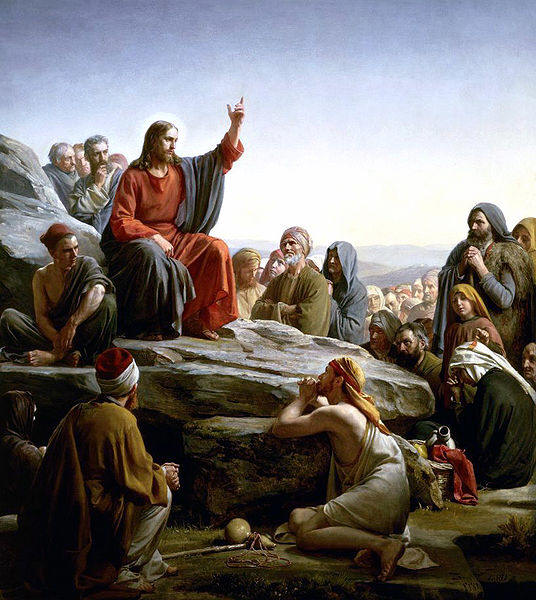
| "The Sermon on the Mount," painted by the Danish artist, Carl Heinrich Bloch. |
A Three-Step Plan to Becoming a Peacemaker
By John Fisher (assisted by AI)
Jesus said: "Blessed are the peacemakers: for they shall be called the children of God."(Matthew 5:9)
In a world often defined by polarization, outrage, and conflict, the ancient promise delivered on the Mount of Olives resonates with profound relevance: "Blessed are the peacemakers: for they shall be called the children of God." During the October 2025 General Conference, Elder Gary E. Stevenson extended a powerful, enduring invitation, urging us to become modern-day peacemakers. Recognizing that peace often seems distant amid global commotion, Elder Stevenson provided clarity by outlining three essential spheres where we can begin our work: in our hearts, in our homes and families, and in our communities.
Elder Stevenson’s counsel reminds us that this crucial work is a personal one. The journey to greater peace begins by transitioning from a participant in the "culture of conflict" to a deliberate builder of bridges. Below, I outline an action plan for applying Elder Stevenson's three points in my own life.
My Personal Peacemaker Action Plan
My plan focuses on taking deliberate, specific steps within each of Elder Stevenson’s three suggested spheres to implement meaningful change.
1. Peacemaking in My Heart (Internal Renewal)
My heart is the foundation of my actions. To align my heart with the principles of peace, I commit to the following internal disciplines:
Guard Against Criticism: I will change my heart by consciously not criticizing others in my thoughts or words.
Filter Digital Input: I will avoid social media platforms and content that are critical or abusive, choosing instead to engage only with uplifting content.
Elevate Language: I will actively use better words when appropriate, recognizing the power of language to build or destroy.
Control Thought Life: I will focus on stopping unkind, evil, or negative thoughts about other people before they take root.
Forgive and Release: I will seek out those I feel have abused me or against whom I hold a grudge and work toward genuine forgiveness, releasing the personal burden of resentment.
2. Peacemaking at Home (Family Foundation)
To improve the situation in my home, I will focus on the power of my words and my efforts to understand my family members:
Speak Only Kindness: I commit to speaking only love and kind things to everyone in my home. I will pause before reacting to ensure my words are constructive, not critical.
Seek Understanding: I will actively try to understand where others are coming from. This means listening with patience, seeking clarity over winning an argument, and applying the principles of gentleness and meekness.
3. Peacemaking in the Community (External Service)
I will extend the peace established in my heart and home outward into my community through actions of respect and service:
Serve the Needy: I will actively look for ways to help others in need in my neighborhood or community, volunteering my time and resources.
Universal Respect: I will always treat others with respect, regardless of their background, beliefs, or standing in the community, seeing them as children of God.
Conclusion: Lead with an Open Heart
The call to be a peacemaker is an invitation to lead with strength, not weakness. As Elder Stevenson taught, peacemaking requires courage, gentleness, and a refusal to sacrifice principle while still seeking compromise and understanding.
By consistently executing this three-step plan—refining my heart by controlling my thoughts, renewing my home with kind words, and reaching out to my community with respect—I can fulfill my divine role as a builder of peace and draw closer to the Prince of Peace, Jesus Christ.
Follow-Up Questions for Reflection:
What is one specific "digital bridge" you can commit to building this week, and what is one social media habit you will stop?
How would practicing "long-suffering" and "meekness" change the next tense discussion you have with a family member?
Who is one person you can choose to forgive this week, and what action will you take to "repair and reunite" that relationship?
Keywords: Peacemaking, Forgiveness, Conflict Resolution, Digital Citizenship, Christlike Attributes
# #BlessedAreThePeacemakers, #PeaceBeginsWithMe, #DigitalBridgeBuilding, #ContentionFreeHome, #LeadWithLove
Reference
Stevenson, G. E. (2025, October). Blessed are the peacemakers. General Conference. The Church of Jesus Christ of Latter-day Saints.
Labels: Christlike Attributes, Conflict Resolution, Digital Citizenship, forgiveness, Peacemaking
Following the Savior’s Example: Choosing Peace over Anger
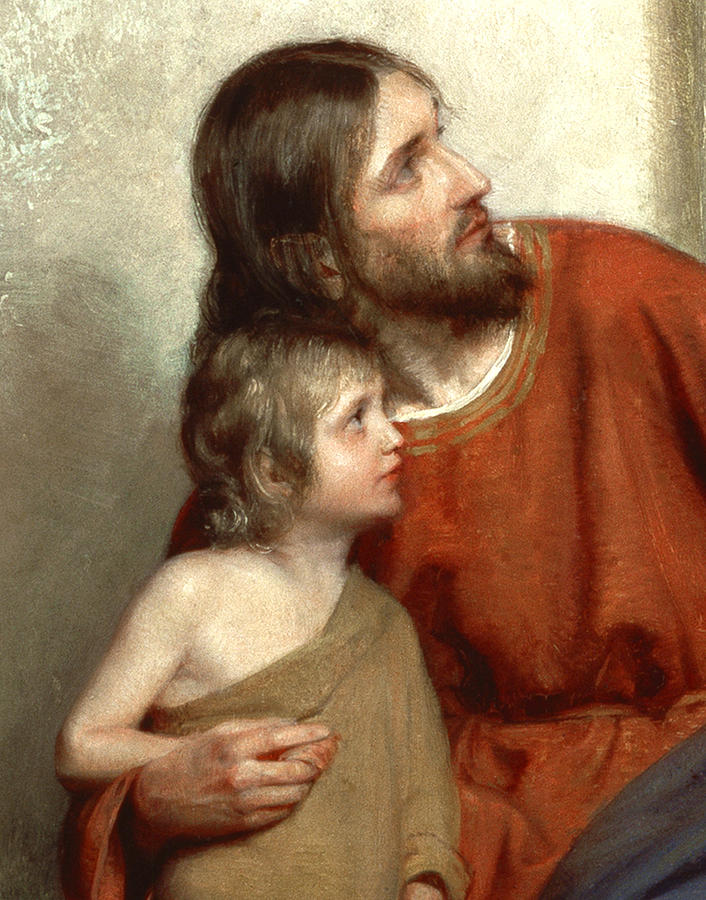 |
| Jesus and child by Carl Bloch |
by John Fisher
In his April 2023 General Conference address, Peacemakers Needed, President Russell M. Nelson, President of The Church of Jesus Christ of Latter-day Saints, issued a profound invitation to become peacemakers. In a world rife with anger and contention, he urged individuals to choose reconciliation, charity, and Christlike love to build stronger, more peaceful relationships.
Summary
President Nelson’s message centers on the transformative power of peacemaking in daily interactions. Drawing from personal experiences and teachings of Jesus Christ, he identifies contention as a choice that harms relationships and drives away the Spirit. He calls on followers of Christ to rise above bitterness, replace animosity with understanding, and demonstrate charity—"the pure love of Christ."
He highlights the Savior's example as the ultimate peacemaker, encouraging listeners to reflect Christ’s love in all areas of life, including family, church, work, and online. President Nelson emphasizes that true disciples of Jesus Christ build, lift, and inspire, becoming instruments of peace in a divided world.
President Nelson shared a powerful personal story from his early years as a surgeon. While assisting in a difficult operation to amputate a leg infected with gangrene, tensions escalated when a team member performed a task poorly. The lead surgeon erupted in anger, losing control of his emotions and throwing a scalpel loaded with dangerous germs. Shockingly, the contaminated scalpel struck President Nelson’s forearm.
Although he was fortunate not to become infected, the experience left a deep impression. In that moment, President Nelson made two personal commitments: he would never lose control of his emotions in the operating room, and he would never throw anything in anger—whether scalpels or words. This vow extended beyond his professional life, shaping his resolve to control his temper and choose peace over anger in all aspects of life.
This experience served as a lifelong reminder of how destructive uncontrolled anger can be. He drew a parallel between the "contaminated scalpel" and the "venomous contention" present in today's world, emphasizing that anger and harsh words can harm others just as deeply as a physical wound. His story highlights the importance of self-control, compassion, and the commitment to treat others with respect and understanding.
10 Quotes from President Nelson
- “Contention is a choice. Peacemaking is a choice. I urge you to choose to be a peacemaker, now and always.”
- “True disciples of Jesus Christ are peacemakers.”
- “Anger never persuades. Hostility builds no one. Contention never leads to inspired solutions.”
- “How we treat each other really matters! How we speak to and about others really matters.”
- “Charity is the antidote to contention. Charity defines a peacemaker.”
- “Contention drives away the Spirit—every time.”
- “Now is the time to bury your weapons of war.”
- “If your verbal arsenal is filled with insults and accusations, now is the time to put them away.”
- “Pray to have the courage and wisdom to say or do what [Jesus Christ] would.”
- “Let us show that there is a peaceful, respectful way to resolve complex issues and work out disagreements.”
Conclusion
President Nelson’s call to become peacemakers is both timely and essential. By choosing reconciliation over contention, individuals can heal relationships, uplift others, and reflect the Savior’s love in their daily lives. As we embrace charity and humility, we help create a more peaceful, Christ-centered world.
Reference
Nelson, R. M. (2023, April). Peacemakers Needed. The Church of Jesus Christ of Latter-day Saints. Retrieved from https://www.churchofjesuschrist.org/study/general-conference/2023/04/47nelson?lang=eng
Keywords
Peacemaking, charity, contention, Christlike love, reconciliation
Hashtags
#PeacemakersNeeded #ChooseCharity #FollowTheSavior #BuildBridges #BeChristlike
Labels: anger, charity, Christlike love, contention, Peacemaking, reconciliation, Russell M. Nelson